Ministries are attractive targets because they manage sensitive information & essential public functions.
- A successful cyberattack can affect more than an IT environment.
- A successful cyberattack can affect national operations.
- A successful cyberattack can expose confidential information.
- A successful cyberattack can interrupt public services.
- A successful cyberattack can compromise official communications.
- A successful cyberattack can disrupt decision making.
- A successful cyberattack can damage public confidence.
- A successful cyberattack can create serious regulatory and operational consequences.

Why Ministries Are Targeted
Ministries manage information that can have significant strategic value.
Their environments can include:
Cyberattack Can Become a Ministry Wide Crisis

Public Services Can Become Unavailable
- Ministries increasingly depend on digital platforms.
- Citizens may use online portals to access public services.
- Employees may depend on internal applications.
- Officials may rely on digital communication systems.
- A successful attack can interrupt these functions.
- Service disruption can quickly become an operational issue.

Government Decisions Can Be Affected
Cybersecurity incidents can affect the information used by ministry teams.
- Attackers may attempt to alter records.
- They may manipulate data.
- They may compromise communication channels.
- They may obtain confidential documents.
- They may monitor internal activity.
Sensitive Information Can Leave the Organization
Ministries can hold large volumes of sensitive information.
- A breach can expose personal records.
- It can expose financial information.
- It can expose confidential documents.
- It can expose employee information & internal communications.
Official Communications Can Be Disrupted
- Ministries depend on trusted communication.
- Email systems can become attack targets.
- Websites can become unavailable.
- Official social accounts can be compromised.
- Internal communication platforms can be targeted.
Real Cost of a Ministry Cyberattack
Operational Disruption

Operational Disruption
- A cyber incident can interrupt important ministry functions.
- Teams may lose access to applications.
- Workflows may stop.
- Public portals may become unavailable.
- Manual processes may become necessary.
- Recovery can take significant time.
Data Exposure
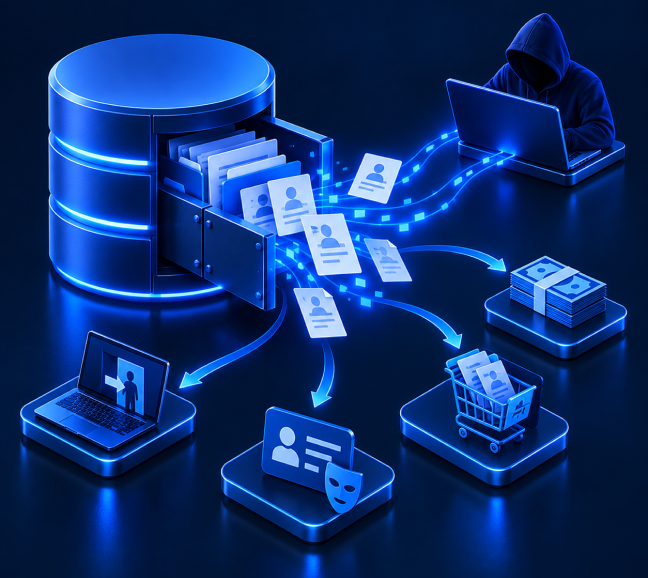
Data Exposure
- Sensitive ministry data can have high value.
- Attackers may steal information before demanding payment.
- Data can be used for extortion.
- Data can be sold.
- Data can support identity fraud.
- Data can also support future intrusion attempts.
Loss of Public Confidence
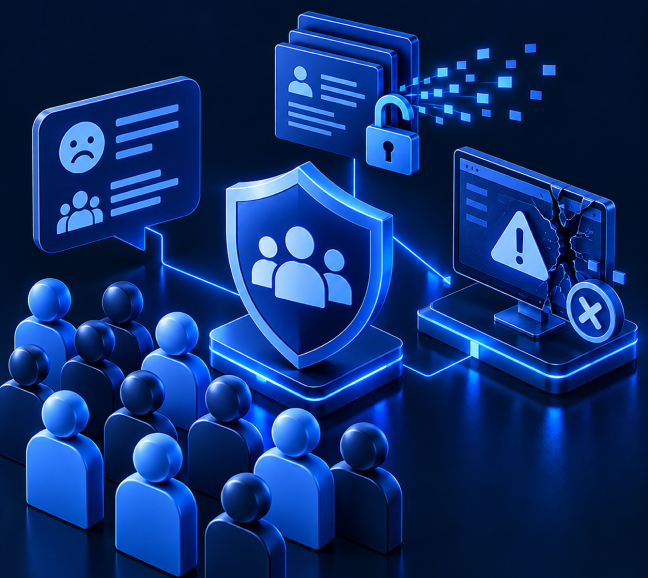
Loss of Public Confidence
- Citizens expect government organizations to protect their information.
- A major breach can create concerns about data security.
- A prolonged outage can create concerns about service reliability.
- Repeated incidents can place additional pressure on government leadership.
- Cybersecurity therefore supports public confidence as well as technology protection.
Ministries Face Multiple Attack Paths
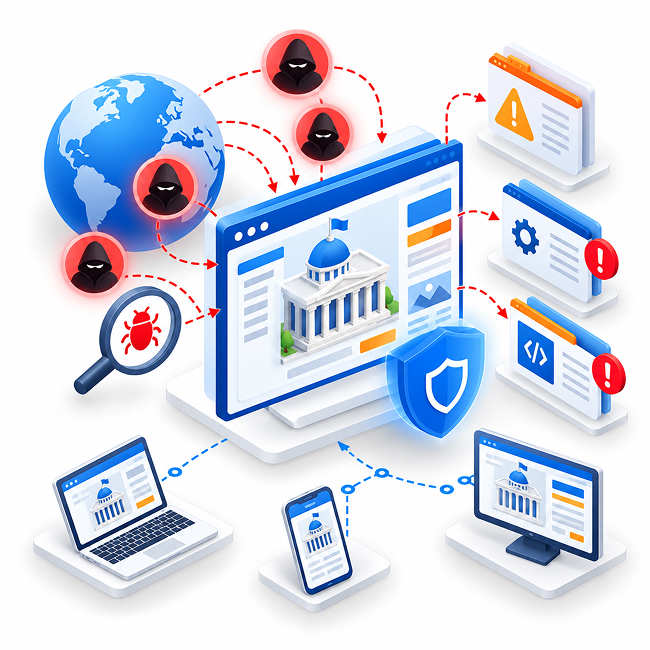
01. Public Facing Applications
- Ministry websites and portals are constantly exposed to the internet.
- Attackers can scan these systems for weaknesses.
- Application vulnerabilities can create opportunities for unauthorized access.
02. Identity Compromise
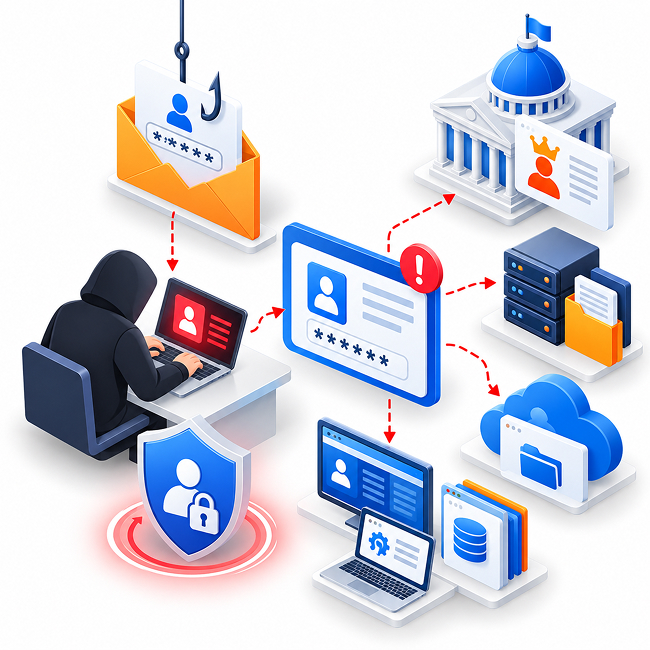
- redentials remain a major attack target.
- Credential theft can expose accounts.
- Compromised accounts can provide access to sensitive resources.
- Privileged identities can create even greater risk.
03. Ransomware
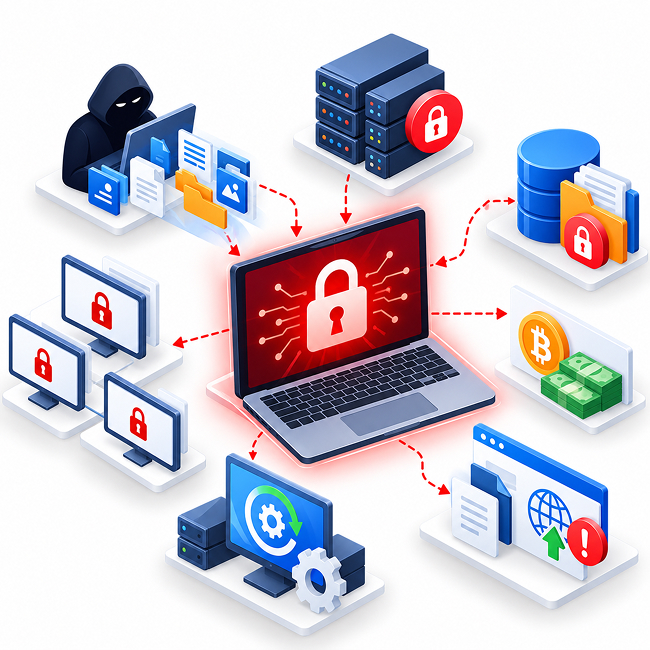
- Ransomware can disrupt ministry operations.
- Attackers may encrypt systems.
- They may steal data before encryption.
- They may demand payment.
- They may threaten public disclosure.
- Operational recovery can become complex.
04. DDoS Attacks
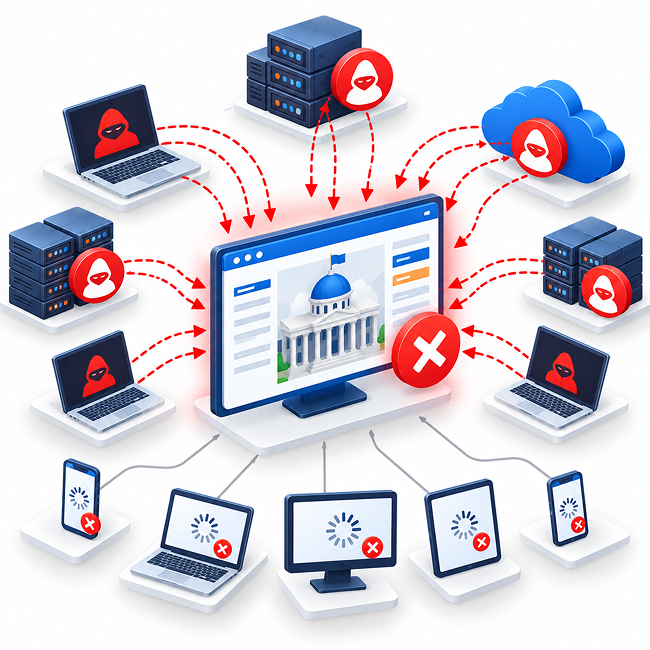
- DoS attacks can overwhelm public facing services.
- Ministry portals can become unavailable.
- Digital services can become difficult to access.
- ENISA reported that DDoS was the dominant threat against public administration in its 2024 analysis.
- The latest ENISA threat landscape also reports that DDoS accounted for 82% of recorded public administration events during 2025.
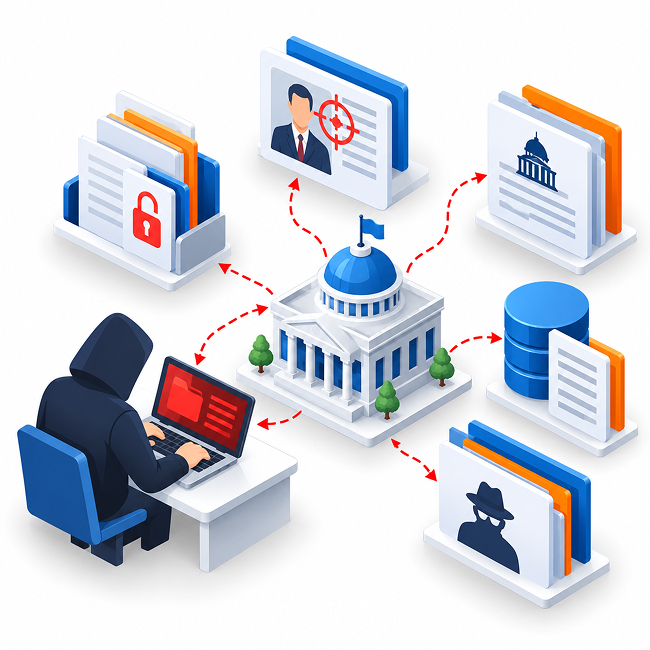
05. Cyber Espionage
- Sensitive ministry information can have strategic value.
- Attackers may seek confidential documents.
- They may attempt long term access.
- They may collect information without immediately disrupting systems.
- ENISA recorded 77 state aligned incidents involving public administration during its 2024 analysis, highlighting the strategic interest in this sector.
06. Supply Chain Exposure
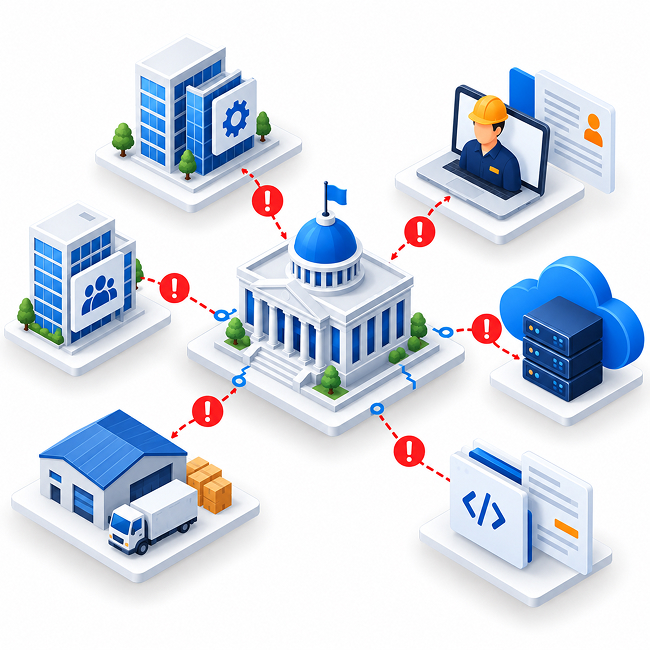
- Ministries rarely operate in isolation.
- Technology providers can connect to ministry systems.
- Managed platforms can process information.
- External integrations can create additional attack paths.
- A weakness within one connected environment can affect another.
Why Ministry Cybersecurity Needs Greater Visibility
Yet important weaknesses may still remain.
The Important Questions Are Different
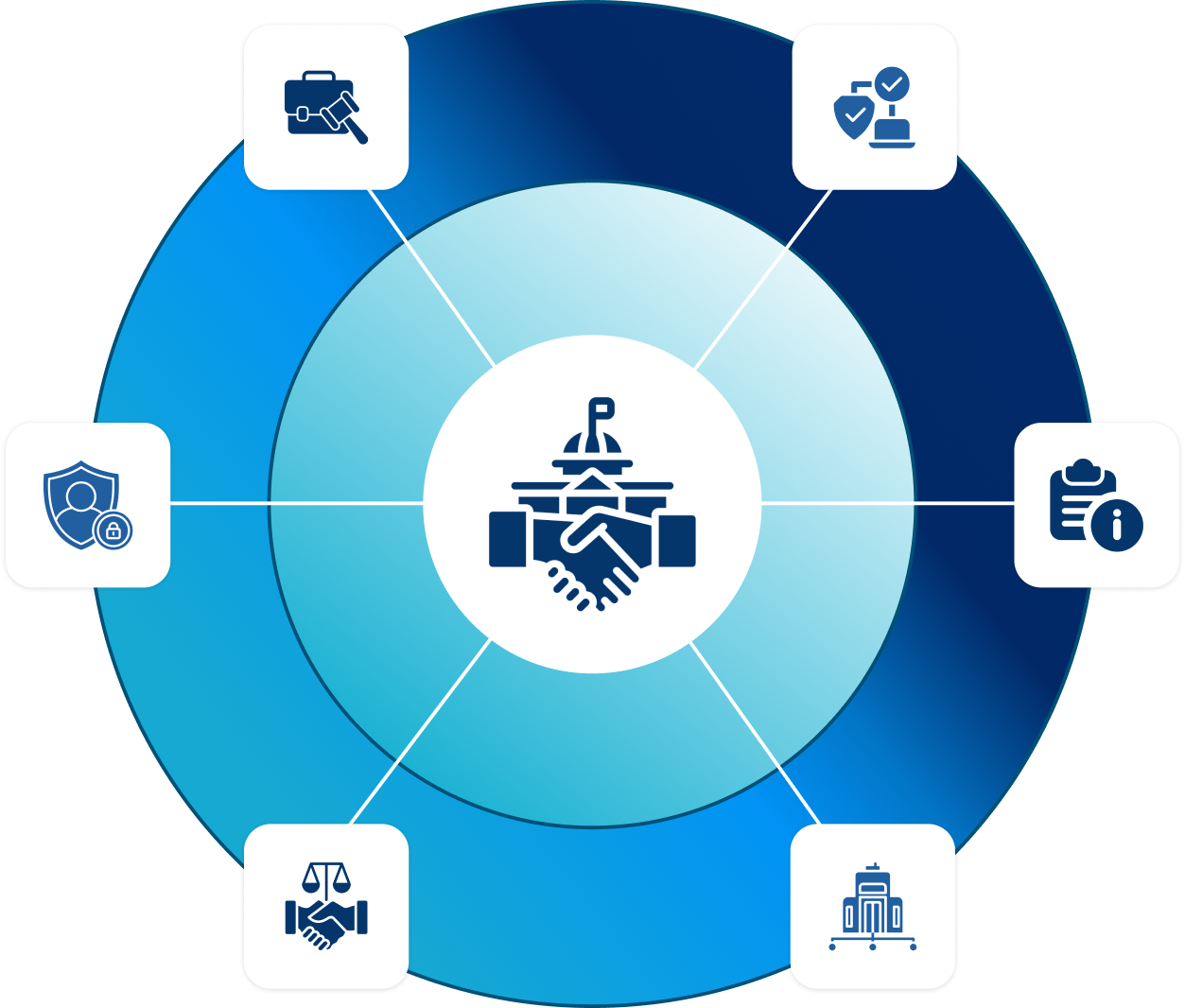
These questions provide a clearer view of ministry cyber risk.

Exposed System
Can attackers reach the exposed system?

Vulnerability Exploited
Can a vulnerability actually be exploited?

Compromised Account
Can a compromised account reach sensitive resources?

Between System
Can an attacker move between systems?

Security Controls
Can security controls detect the attack?
Respond Quickly
Can the organization respond quickly?

Activity Detected
Can privileged activity be detected?
Cybersecurity for Ministries
CyberSec Consulting helps ministries
strengthen their understanding of cyber risk across complex digital environments.
Our approach
focuses on security outcomes rather than simply adding more technologies.


Understand Exposure
Identify important assets, external exposure, access paths and security weaknesses.

Validate Security
Determine whether security controls perform effectively against realistic threats.

Protect Sensitive Information
Identify risks surrounding confidential ministry and citizen information.
Improve Detection Readiness
Identify gaps that may allow suspicious activity to remain unnoticed.
Support Cyber Resilience
Help ministry teams prepare for disruption, containment and recovery.
Improve Security Decision Making
Give security leaders clearer information about risk and security priorities.
Strengthen Identity Security
Understand how compromised credentials and excessive access can affect ministry environments.
Protecting Different Ministry Functions
Different ministries can face different cyber risks.

Finance Ministries
- Financial information can attract fraud, credential theft and data theft.
- Cybersecurity must protect sensitive financial systems and information.

Health Ministries
- Health information requires strong confidentiality and access protection.
- A breach can affect citizens and healthcare operations.

Foreign Affairs Ministries
- Diplomatic information can have significant strategic value.
- Cyber espionage can target communications & confidential information.
Interior Ministries
- Sensitive operational information can make these environments attractive targets.
- Identity compromise and unauthorized access can create serious exposure.

Education Ministries
- Education systems can contain large volumes of personal information.
- Public platforms and connected institutions can expand the attack surface.

Transport Ministries
- Digital infrastructure can support critical transportation functions.
- Service disruption can create operational consequences.

Justice Ministries
- Legal information requires strong integrity and confidentiality.
- Unauthorized access or alteration can affect legal processes.

Energy Ministries
- Energy related information can carry strategic and operational importance.
- Cyber incidents can affect critical service continuity.
Ministry Cybersecurity Challenge
Ministry environments must balance security with accessibility.
 Citizens need
digital services.
 Employees need
efficient access.
 Officials need
reliable communication.
 Partners need
controlled connectivity.
 Security teams need
visibility.
 Leadership needs
measurable risk information.
Cyber Resilience for Ministry Operations
Cyber resilience means being prepared before an incident occurs.
What a Ministry Should Ask Its Security Team
Why Cybersecurity Matters Across the Ministry Ecosystem

 Ministry
cybersecurity extends beyond the central IT team.Senior
leadership needs risk visibility.Security
teams need technical visibility.Department
heads need operational awareness.Employees
need security awareness.Suppliers
need security accountability.Partners
need controlled access.Every
connected stakeholder can influence the overall security environment.
Building Stronger Ministry Cyber Resilience
Cyber threats against ministries can evolve quickly. Attackers can change techniques. Digital services can expand. Cloud environments can grow. Third party dependencies can increase. New vulnerabilities can emerge. AI can accelerate phishing, impersonation and other malicious activity. ENISA has also identified increasing use of AI by threat actors as an emerging concern in its latest threat landscape. Ministry security teams need continuous awareness of these changes.
CyberSec Consulting helps organizations understand where security exposure exists and where security
readiness needs improvement.
Protect sensitive ministry information. Strengthen digital services.
Improve cyber resilience.
Talk to CyberSec Consulting about your Ministry cybersecurity requirements.
Talk to CyberSec Consulting →FAQs
Ministries in the UAE can face DDoS attacks, ransomware, phishing, identity compromise, application vulnerabilities and data breaches. UAE ministry cybersecurity also needs strong protection for sensitive government information and digital public services.
Ministry cybersecurity in Saudi Arabia is important because government departments manage sensitive information and critical digital services. A successful cyberattack can disrupt public services, expose confidential data and compromise administrative systems.
Ministries in Egypt can improve cybersecurity through continuous asset visibility, identity protection, security validation, vulnerability management and incident preparedness. Egypt ministry cybersecurity should also consider sensitive citizen information and interconnected government systems.
Ministries in the UK can face ransomware, phishing, DDoS attacks, credential compromise, data breaches and targeted intrusion attempts. UK ministry cybersecurity also needs to support continuity of important public services.
Ministries in Qatar operate digital services and manage sensitive government information. Qatar ministry cybersecurity should address risks involving public applications, identities, data, infrastructure and third party connections.
Ministries across Africa can face ransomware, phishing, credential theft, data breaches, application attacks and service disruption. Africa ministry cybersecurity strategies should reflect each ministry s technology environment, operational priorities and regulatory requirements.
Ministries hold valuable information and support important government functions. Attackers may seek financial gain, disruption, espionage, information theft or strategic access.
Yes. Government environments often share applications, networks, identities, data and third party connections. A compromised account or system can therefore create risks beyond the initially affected ministry.
Ransomware can make applications and information unavailable. Attackers may also steal data before encryption. Recovery can disrupt internal operations and public services.
A compromised identity can provide attackers with legitimate access. Excessive permissions can increase the potential impact. Privileged accounts require particular attention because they can provide access to important systems.
Ministry data can include personal, financial, legal, operational and strategic information. Attackers can use stolen information for fraud, extortion, espionage or further attacks.
Ministries can combine asset discovery, vulnerability assessment, identity analysis, application testing and security control validation. Continuous assessment can reveal risks that may not appear in standard security dashboards.
Regular security testing helps determine whether controls perform effectively against realistic attack techniques. Testing can identify detection gaps, configuration weaknesses and response limitations.
A ministry should understand its critical systems, sensitive data, privileged identities and external exposure. Incident response, recovery planning, security testing and operational exercises can improve preparedness.
Yes. Third party providers may have access to systems, applications or information. Weak security controls within a connected organization can create another route into the ministry environment.
Strong access controls, identity security, data protection, security monitoring, vulnerability management and regular security validation can help reduce exposure. Data access should also align with legitimate operational requirements.
CyberSec Consulting helps ministries understand cyber exposure, identify meaningful security weaknesses, validate security controls and strengthen cyber resilience. The approach focuses on practical risk visibility and operational security readiness.
Ministry websites are publicly accessible and highly visible. DDoS attacks can overwhelm internet facing services and prevent citizens from accessing important information or digital services.
A ministry CISO should maintain visibility into external exposure, vulnerabilities, privileged access, identity activity, sensitive information, security control effectiveness and incident readiness. Continuous monitoring can help identify changes in risk.
Prevention cannot eliminate every cyber risk. Resilience helps ministries detect incidents, contain damage, maintain important operations and recover critical systems when an attack occurs.
Copyright © 2026 CyberSec Consulting - All Rights Reserved